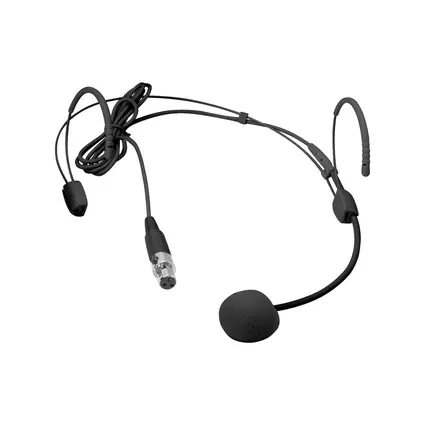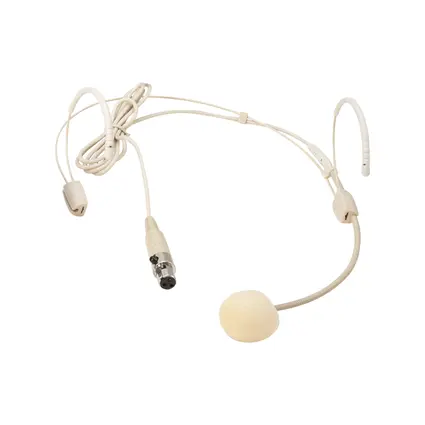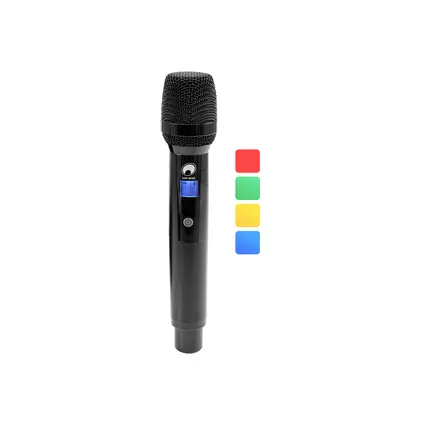
Anyone who regularly works with wireless technology knows the feeling when an important frequency is at stake: uncertainty, planning pressure and many unanswered questions are usually the result. All the better is the news that the 823–832 MHz band will not expire at the end of the year as feared, but will remain usable in Germany for another ten years. Many existing systems can therefore continue to be operated without modification. Nevertheless, one thing remains true: frequency regulation is not standardized across Europe. What is permitted in Germany may be handled differently in other countries – a point that touring productions in particular should continue to keep in mind.
Contents
1. Frequency usage and classification
The electromagnetic spectrum from 9 kHz to 245 GHz is fully allocated. Audio wireless equipment is generally considered a secondary user. This means that wireless microphones are allowed to share frequency ranges that are actually reserved for primary services – but only as long as these primary services are not interfered with.
Typical primary users include television and radio broadcasters, public safety and security services such as police and fire departments, as well as various fixed and mobile radio services. These services have priority within their respective frequency ranges and must be able to operate without interference at all times.
In practice, this means that we often operate in intermediate ranges or local gaps where the primary user is not active. This explains why a wireless frequency may work perfectly at one location but cause severe interference at another. A system that operates flawlessly at an event in Nuremberg may already experience dropouts just a few kilometers away – for example near a TV transmitter or a microwave link. In such cases, the issue is not the wireless microphone itself, but the dominant primary usage occupying that frequency range. To users, it may appear as if the frequency is “defective”, when in reality it is simply not available at that location.
The only exception are public broadcasting organizations, which historically have their own frequency allocations. However, these have also been restructured several times in the past.
2. Frequency management: essential for interference-free operation
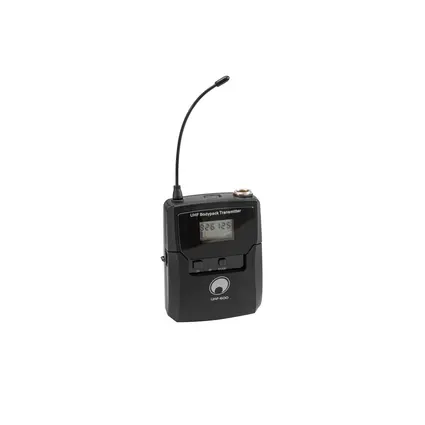
In the UHF ranges typically used in the event industry, extensive setups with many parallel wireless channels can be realized – provided that the receivers use high-quality filters, frequency planning is well thought out, and intermodulation is taken into account. Each transmitter generates additional products alongside its main frequency, which can interfere with neighboring systems. For this reason, all channels should be operated within compatible frequency groups. In the UHF-600 systems from our range, for example, these groups are documented in detail in the user manual.
How sensitive this coordination is becomes particularly evident when additional channels are added at short notice. In a stage show with twelve coordinated microphones, the system runs stably as long as all units operate within the same group and their intermodulation products do not interfere with each other. However, if two additional microphones are added spontaneously and transmit on uncoordinated frequencies, these new signals can disrupt individual channels that were previously carefully planned. The system then appears unstable, even though the technology itself is functioning perfectly – it simply lacks a common, coordinated frequency basis. In addition, externally generated signals, such as those from a nearby event, can affect individual frequencies or entire groups.
3. Lighting technology: a significantly more complex situation
Unlike wireless microphones, which operate in clearly defined frequency ranges, lighting control primarily uses generally license-free frequencies. However, these frequencies are not only used by event technology applications, but simultaneously by Wi-Fi, smart devices, private data transmissions and a wide range of consumer wireless solutions. Many of these devices also transmit at significantly higher power levels than is common or permissible in the event industry – a challenge for any wireless transmission in lighting control.
How quickly this can become a problem is evident at corporate events where stage lighting is controlled via wireless DMX. During rehearsals, everything works flawlessly. However, once guests arrive, hundreds of smartphones automatically activate their Wi-Fi and Bluetooth connections. At the same time, the event venue expands its own Wi-Fi network with additional access points. The sheer number of signals occupies large portions of the available spectrum. Lighting control signals then arrive with delays or drop out briefly – not due to a technical defect, but because the wireless channel is simply overloaded. For critical applications, the use of wired or redundant solutions is therefore recommended.
4. Planning security helps to overcome technical challenges
The extension of the 823–832 MHz frequency band provides valuable planning security for the event industry. However, even with stable regulatory conditions, careful frequency management remains essential – especially in environments where many systems operate in parallel or where external signals further complicate the situation.